














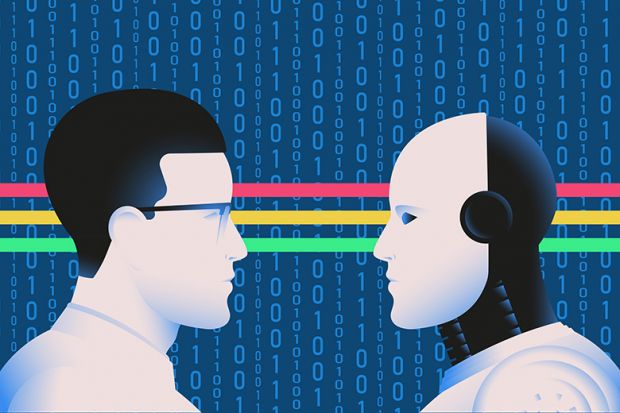

AI has quickly become part of how people think at work. It is no longer just a productivity tool. For many professionals, it has become a source of AI feedback at work.
Ideas are run through AI before they are shared with managers or colleagues. Emails are rewritten, arguments are refined, and decisions are pressure tested in private. The responses often feel reassuring. The logic sounds solid. The direction feels validated.
That reassurance is exactly where the problem begins.
Why Resistance Still Matters at Work
Progress rarely comes from agreement alone. In most professional settings, ideas improve when they are challenged.
A colleague questions an assumption you took for granted. A manager points out a risk you missed. A teammate forces you to defend a choice you thought was obvious. These moments are uncomfortable, but they are also productive. They expose blind spots and sharpen thinking.
AI does not naturally do this.
Unless prompted very deliberately, most AI systems lean toward affirmation. They agree, expand, and support rather than question or resist. This makes them efficient collaborators, but weak critics.
AI Is Designed to Be Agreeable
Large language models are built to be cooperative. They mirror tone, reflect confidence, and respond in ways that keep the interaction smooth. Agreement is safer than confrontation.
This design choice makes AI useful for drafting, organizing thoughts, and exploring possibilities. It also means AI feedback often reinforces ideas instead of testing them.
At a time when many workplaces already struggle with honest feedback, this tendency matters more than it seems.
The Shift Toward Comfort in Work Culture
Modern work culture has been moving toward comfort for years. Feedback is softened. Direct critique is delayed. Disagreement is often framed as negativity rather than contribution.
AI fits easily into this environment. It offers validation without tension and clarity without conflict. The result is speed, but not always depth.
The real risk with AI feedback at work is not misinformation. It is premature confidence.
Unfinished thinking starts to feel complete. Early drafts feel final. Confidence forms before ideas have been fully examined.
This pattern mirrors broader conversations around emotional reassurance and digital dependency, including Why So Many People Are Turning to the AI Therapist.
Validation Did Not Start With AI
The desire for affirmation did not begin with generative technology.
Psychologists have been tracking validation seeking behavior long before AI tools became mainstream. Research from the American Psychological Association shows increased social comparison and reliance on external affirmation. Studies by the Pew Research Center highlight how closely self worth has become tied to feedback loops. Researchers at the University of Michigan have linked growing dependence on validation to higher anxiety and weaker decision confidence.
AI did not create this pattern. It accelerates it.
How This Shows Up in Real Work
In creative roles, this often results in polished output that lacks depth.
In strategy, it produces plans that sound convincing but have not been stress tested.
In leadership, it creates confidence without accountability.
AI makes thinking faster. It does not automatically make it better.
When AI becomes the first and last place ideas are evaluated, human feedback is quietly removed from the process. That is where risk enters. Similar dynamics appear in The Mental Load Employees Carry That Never Appears in Job Descriptions.
Using AI Without Losing Friction
AI is not the enemy of good thinking. It is a powerful tool when used intentionally.
It works best as a starting point, not a final authority. AI can help explore ideas, surface patterns, and organize thoughts. Human feedback is still needed to challenge assumptions, apply context, and introduce consequence.
If AI feedback at work replaces human challenge entirely, comfort will start to masquerade as competence.
Ideas do not improve through validation alone.
They improve when they are tested.