

















You finally have an empty hour on your calendar. No meetings, no calls and nothing marked urgent. It should be the perfect time to finish that proposal or think through the idea you have been putting off.
Except it is 4 PM. You have already been through three meetings, dozens of messages and several “quick” requests that were not particularly quick.
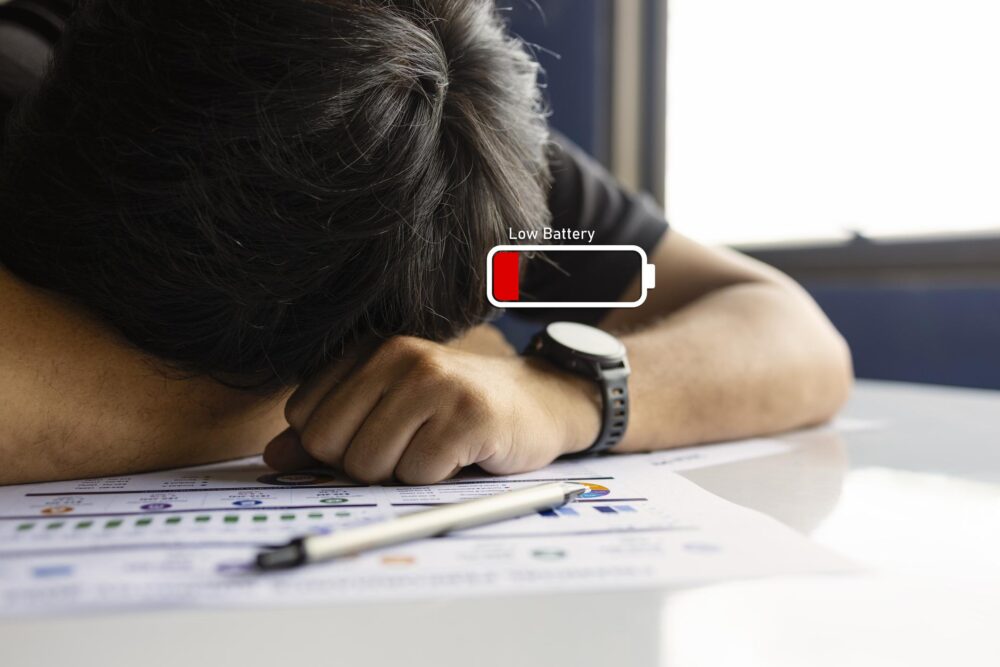
You still have time. What you may not have is energy.
This is where traditional time management at work starts to fall short. We organise our days around available hours, but rarely consider whether we have the mental capacity to use those hours well.
Eight Working Hours Are Not Eight Equal Hours
Most workdays are planned as if every hour has the same value.
If a task takes an hour, we find an hour for it. If a meeting ends at 2 PM, we assume the next task can begin at 2:01.
Our brains are not quite as cooperative.
Writing a strategy at 10 AM after a quiet morning feels very different from writing one at 4 PM after back-to-back meetings. Coming up with a campaign idea requires a different type of energy from approving an invoice or answering an email.
Yet we keep treating these tasks as interchangeable blocks on a calendar.
Research from RescueTime reflects the gap between working hours and focused work. Its data suggests the average knowledge worker gets three hours or less of Focus Work during an eight-hour workday. Email, meetings, chats and constant context switching take up much of the rest.
Your Best Energy Might Be Going to Your Easiest Work
Think about how a typical morning starts.
Open the laptop. Check email. Reply to Teams or Slack. Look at whatever came in overnight. Join the morning meeting. Deal with the first unexpected problem of the day.
By the time you reach the work that actually requires concentration, you have already spent a significant amount of mental energy.
Then we wonder why focusing feels difficult.
This is closely connected to what we previously described as the efficiency trap: becoming so busy executing tasks that constant activity starts to look like meaningful productivity.
Energy management does not mean doing less. It means becoming more selective about what gets your best hours.
Meetings Cost More Than the Time on the Calendar
A 30-minute meeting rarely costs exactly 30 minutes.
You stop what you were doing beforehand, join the call, process whatever was discussed and then try to return to the task you left behind.
Sometimes another notification arrives before you even get there.
That is how an entire day can feel busy without feeling particularly productive. You attended, answered, approved and responded, but the important piece of work is still sitting in another tab.
Over time, this constant availability can become part of a wider burnout problem. 925 has previously explored why protecting your energy sometimes requires saying no rather than automatically accepting every request that enters the working day.
Time Management at Work Needs a Different Question
Traditional time management asks:
When can I fit this in?
Energy management asks:
When am I actually good at doing this?
That does not mean building your entire schedule around how you feel. Deadlines still exist, meetings still happen and sometimes work needs to be finished when your energy is low.
But there is a difference between occasionally pushing through and consistently giving your hardest work whatever concentration happens to be left.
If you think most clearly in the morning, perhaps your inbox does not need the first hour of your day. If four meetings leave you unable to write, avoid placing your most important writing task immediately afterwards when possible.
Lower-energy hours are not useless either. They can work well for admin, approvals, scheduling and routine follow-ups.
Companies Need to Manage Energy Too
Energy management cannot sit entirely with employees.
Companies cannot talk about creativity while filling calendars with meetings. Managers cannot encourage deep work while expecting immediate responses throughout the day.
The wider workplace picture makes this particularly important. Gallup’s 2026 workplace research found that fewer than half of U.S. employees strongly agreed that they knew what was expected of them at work. Gallup also estimates that disengagement costs the U.S. economy around $2 trillion in lost productivity.
Better productivity is not simply about squeezing more tasks into the same eight hours.
Sometimes, it is about recognising that the person who started work at 9 AM is not working with the exact same level of concentration at 4 PM.
Maybe the problem was never that there were not enough hours in the workday.
We just kept pretending all eight of them were equal.